
THE DISCOVERY OF WITCHCRAFT : REGINALD SCOTT AND THE DEBUNKING OF SUPERSTITION
- Sid Quatrine
- Nov 28, 2025
- 5 min read

Updated: Dec 3, 2025


In late-sixteenth-century England, fear of the supernatural was deeply ingrained in daily life. Witch trials, accusations of sorcery, and fears of unseen forces influenced how communities interpreted misfortune.
Reginald Scot, an unlikely man from Kent, whose groundbreaking 1584 work, The Discoverie of Witchcraft, questioned the belief in witchcraft but also revealed the mechanics behind illusions, miracles, and conjuring tricks, these acts many believed at the time demonstrated true supernatural power. His book marked a turning point in the history of skepticism and unexpectedly in the history of magic.
Reginald Scot was born around 1538 , he briefly studied at Hart Hall, Oxford, before returning to rural Kent to manage his family estates. Though not a professional scholar, he had an analytical mind and a deep concern for the poor. His early work, The Perfect Platform of a Hop-Garden (1574), was a practical agricultural manual. However, his personal experiences with witchcraft accusations in the 1580s led him in a radically different direction.
In 1581, Scot would witness the trial of Margaret Symons, a woman accused of witchcraft but later acquitted. The following year however several women were executed in nearby St. Osyth on similar charges. Convinced these events stemmed from fear, ignorance, and injustice, Scot would begin compiling his magnum opus on witchcraft. Reviewing over two hundred classical & medieval texts, determined to dismantle the beliefs supporting witch persecutions.
The result was The Discoverie of Witchcraft, published in 1584. Scot, belief in witches was a dangerous ideology. He argued that supposed acts of witchcraft were mere illusions, misunderstandings, manipulated testimonies, or deliberate frauds. Scot’s work provided unprecedented detail about the specific methods by which “supernatural” feats were performed. Rather than merely denying magic, Scot demonstrated how it was done.

Some of the most striking sections of the book involve tricks with everyday objects. Scot would explain, for example, how a conjurer could feign the ability to cut off a person’s head. Utilising a concealed wooden block, misdirection, and a false blade. He described how performers made a coin vanish, only to reappear inside a sealed box or under a spectator’s hand, using palming techniques and distractive patter. Such illusions, though commonplace to modern magicians, were astonishing in the sixteenth century and often attributed to the work of demonic forces.
Scot also detailed the method behind the 'rope trick', where a rope appeared to rise into the air of its own accord, this effect was produced not by spirits, but by stiffening the rope internally or through subtly anchoring.
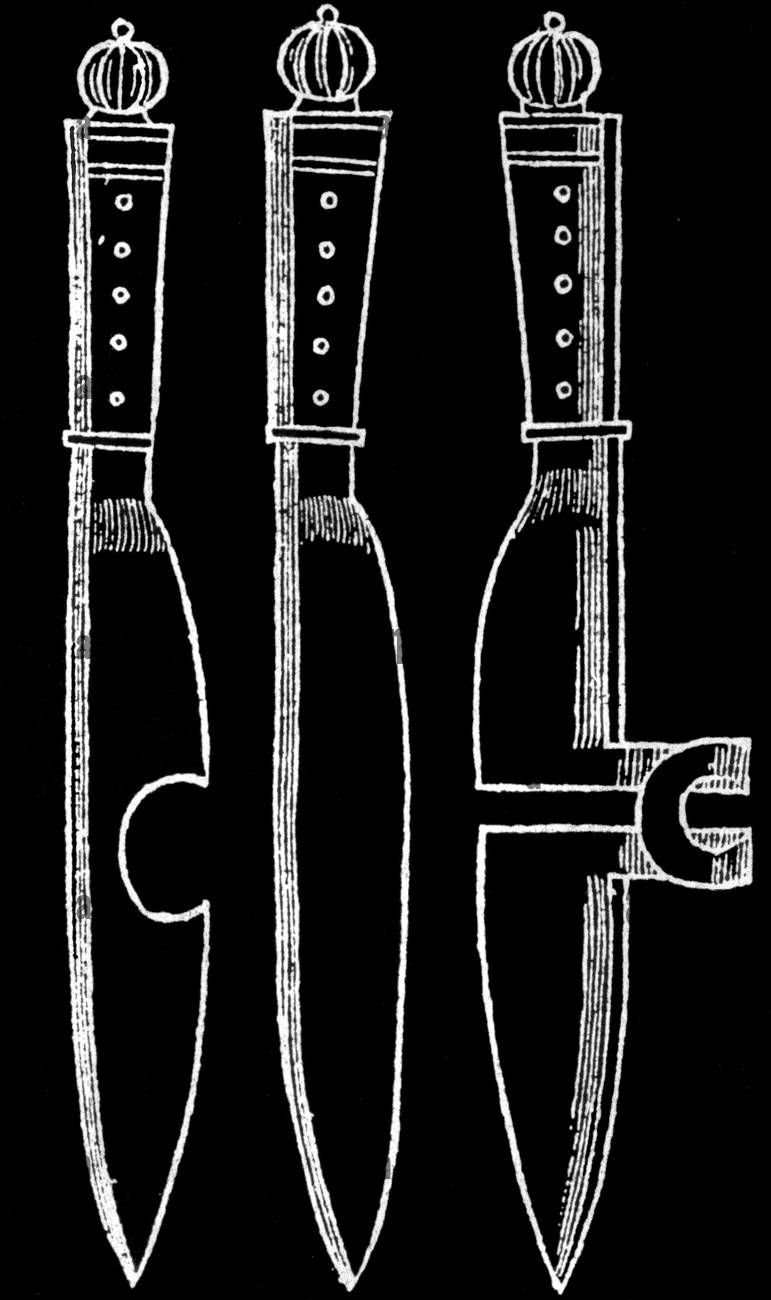
Another illusion Scot exposed was the popular 'knife through arm' effect, where a performer appeared to plunge a dagger through his own limb without bleeding. Scot provided the method a hollow blade and pressure against a hidden support that prevented real penetration, combined with animal blood concealed beforehand to sell the illusion when the blade was withdrawn. For onlookers, unaware of such mechanical props, only demonic practice seemed sufficient to explain such an effect.
Scot also documented powders and chemicals used to achieve “supernatural” effects: flash powders, combustibles, mixtures that produced colored flames, and chemicals that emitted smoke or sparks at specific moments. These were frequently employed by cunning individuals or deceitful “miracle workers” to mimic the presence of spirits. Scot described how phosphorus-like materials and volatile powders could be ignited to create ghostly glows. Phenomena that would frighten uneducated onlookers.
Among his most socially valuable sections was the dismantling of fortune-tellers and astrologers, who relied on memorised scripts and vague predictions rather than supernatural insight. Scot documented how these individuals manipulated clients by using knowledge of local gossip, reading, and psychological suggestion. methods still employed today.
Even more controversially, Scot explained how ventriloquism then known as 'belly speaking' was used to simulate the voices of spirits or demons. To ordinary people, a voice coming from behind a wall, beneath a floor, or inside a cupboard was clear proof of the supernatural. Scot went on to describe the mechanics of projecting the voice and noted that those who used such techniques often posed as mediums or spirit-summoners.
These in-depth revelations served a moral purpose: to demonstrate that numerous accused witches were being held responsible for acts that had natural explanations. His aim was not just to expose performers but to safeguard the vulnerable from lethal accusations.

The book was both a sensation and an outrage. Its rational tone posed a sharp contrast to the dominant demonological thinking of the time, particularly the views later championed by King James VI and I. A legend arose that James ordered all copies of The Discoverie of Witchcraft to be burned upon ascending the English throne in 1603. Though this claim lacks support from surviving records, it's likely the book was banned with many binding their copies in alternate covers to guise them.
Despite hostility the book was translated into Dutch in 1609 and again in 1637, reprinted in London in 1651 and 1654, and published in a significantly altered folio edition in 1665. Ironically, the 1665 edition would add entire chapters describing rituals for conjuring spirits and the drawing of magical circles. These materials were foreign to Scot’s sceptical intent and were likely included to satisfy the market for occult literature over accuracy.
Reginald Scot died in 1599 at his estate in Smeeth, Kent, and was buried in nearby Brabourne. His reputation would lay dormant for centuries, overshadowed by the sensationalism of witch-hunters. Yet as witch trials declined and the Enlightenment spread, Scot’s work was rediscovered to high praise.
Today, The Discoverie of Witchcraft is acknowledged as a pivotal work in the history of skepticism. It provided one of the first thorough defenses for those accused of witchcraft, revealing how superstition, desperation, and social tension could be exploited with devastating consequences. Simultaneously, Scot unintentionally created the earliest English-language textbook on magic, impacting generations of conjurers. Modern magicians still find elements of their craft rooted in Scot’s explanations.
In Scot’s era, fear and misunderstanding were prevalent in explaining the unknown. Through careful research, sharp reasoning, and bold exposure of deception, Scot showed that extraordinary claims could be traced back to ordinary causes.
Copyright © 2025 by Sid Quatrine, Author, Editor
References
Scot, R. (1584) The Discoverie of Witchcraft. London: William Brome.
Scot, R.; Nicholson, B. (ed.) (1886) The Discoverie of Witchcraft. London: Elliot Stock.
Thomas, K. (1971) Religion and the Decline of Magic. London: Weidenfeld & Nicolson.
Sharpe, J.A. (1996) Instruments of Darkness: Witchcraft in England 1550–1750. London: Penguin Books.
Kupperman, K.O. (1983) ‘Reginald Scot and the Problem of Witchcraft’, Journal of the History of Ideas,
Christopher, M. (1962) The Illustrated History of Magic. New York: Thomas Y. Crowell.
Comments